In the Middle East and across much of the world, the business phone number is still one of the most trusted entry points to a company. Customers save it in their contacts. They call when something is urgent. They expect a human voice on the other end — or at least something that sounds like one. That is why so many teams hesitate to touch their phone setup, even when they are already using AI on WhatsApp, web chat, and email.
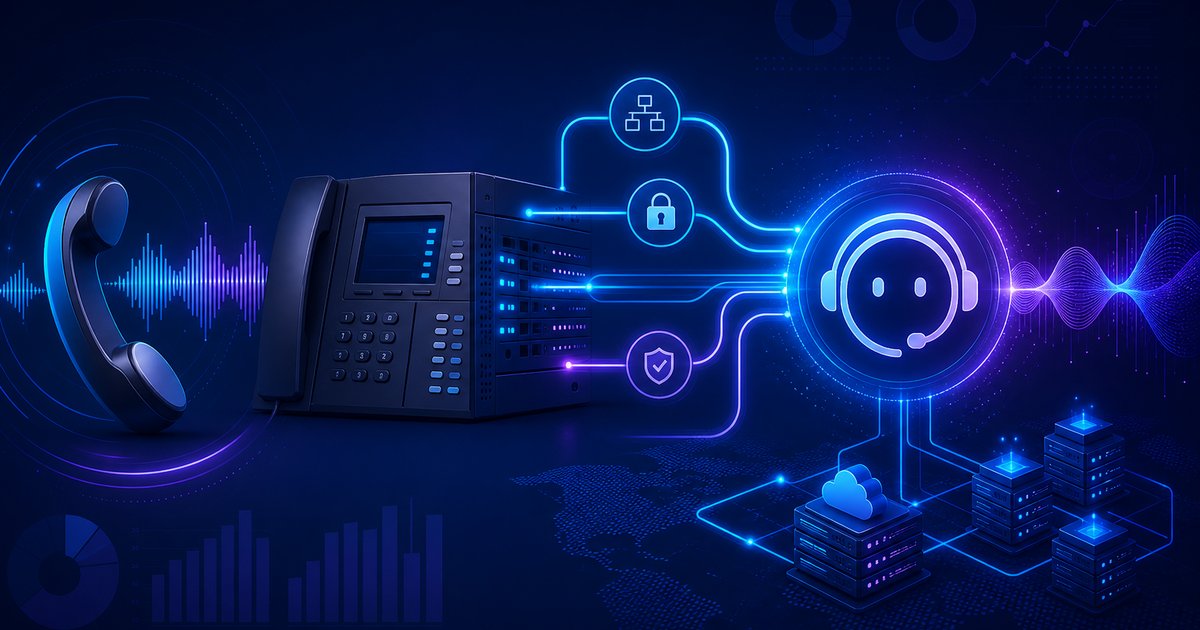
The good news is that you do not have to replace your PBX, throw away your Asterisk dialplan, or ask customers to call a new number. With SIP routing, your existing phone system stays in place. You simply decide which calls should reach an AI voice agent, and Mujib answers them using the same business knowledge your team already maintains elsewhere.
Why companies keep their PBX — and still add AI
A PBX is more than hardware or software sitting in an office. It is the routing logic behind your support line, your sales extensions, your after-hours flow, and the way calls move between departments. Teams have spent years tuning it. Reception staff know which extension to transfer to. Managers know which queue gets overloaded on Sunday evenings.
Replacing all of that for a standalone AI demo might sound modern, but operationally it is painful. Customers do not want a new number. Staff do not want a parallel system. Finance does not want to pay twice for telephony.
SIP offers a more practical path. Instead of rebuilding your phone world, you connect it. A call comes in exactly as it always has. Your PBX decides whether it should ring a human desk, enter a queue, or be handed to Mujib. From the caller's perspective, nothing changed. From your team's perspective, the line just got a lot more capable.
What SIP actually does — without the jargon overload
SIP, or Session Initiation Protocol, is the language modern phone systems use to start and route calls over the internet. If you work with a VoIP provider, a SIP trunk, FreePBX, 3CX, or Asterisk, you are almost certainly already using SIP behind the scenes.
Think of it as the handshake between systems. Your PBX receives the call. SIP tells the network where that call should go next. When Mujib is added to the picture, that destination can be your AI voice agent instead of — or before — a live employee.
That is the real breakthrough for customer support teams. The AI is no longer trapped inside a browser demo or a marketing landing page. It becomes part of your live phone operation.
What happens during a real customer call
Imagine a customer calling your main line to ask about store hours, a delivery delay, or an appointment change. They dial the same number they have used for years. Your PBX answers, applies the routing rules you already defined, and forwards the call to Mujib over SIP.
Mujib listens in real time, converts speech to meaning, and checks your knowledge base: policies, FAQs, product sheets, service areas, pricing rules, whatever your team uploaded. If the business uses connected systems, the agent can also pull live context before answering. Then it responds in a natural voice, in the customer's language, without the awkward pause of old IVR menus.
If the issue is simple, the call ends there. If the caller is frustrated, asks for a refund exception, or needs something your policy says must be handled by a person, the conversation can be escalated. The human agent does not start from zero. They receive the transcript, the topic, and the reason the AI handed off the call.
The smartest phone AI projects do not try to replace every call. They remove the repetitive ones so humans can focus on the calls that actually need judgment.
Where SIP voice AI creates the most value
This model works especially well in industries where phone volume is high but the questions repeat. Clinics receive dozens of calls about opening hours, insurance, and rescheduling. Telecom and ISP teams answer package and outage questions all day. Delivery companies field status checks that could be answered instantly if the system already knows the order. Real-estate offices spend hours qualifying callers who only wanted to know whether a unit is still available.
In each case, the phone line is not the problem. The problem is that skilled people spend too much time answering predictable questions. SIP routing lets you keep the phone line your market already trusts while shifting the predictable workload to AI.
There is also a quieter benefit that leadership teams notice after a few weeks: consistency. The agent on WhatsApp, the widget on your website, and the voice on your phone line finally tell the same story. That matters when customers switch channels mid-issue — and they often do.
How to prepare before you connect anything
Technical setup is only half the work. The other half is deciding how you want the phone line to behave. Start with your knowledge base. If your AI does not have reliable answers, it does not matter how elegant the SIP route is.
Next, define call policy in plain business language. Which calls should AI answer first? Which hours should it cover? When should it transfer immediately to a human? What topics are never handled by automation? These decisions should be made by operations and support leaders, not only by the telecom engineer.
Language matters too. If your customers call in Arabic, English, or a mix of local dialects, configure that upfront. A voice agent that sounds correct on chat but stiff on the phone will undermine the whole experience.
Once the business rules are clear, your technical team can work with your PBX or SIP provider to route the right calls to Mujib. In Asterisk environments, that usually means updating the dialplan so specific extensions, time conditions, or overflow queues point to the Mujib voice endpoint.
What changes after go-live
The first thing teams usually notice is speed. Callers get answers without waiting through hold music. The second is coverage: evenings, weekends, and peak spikes become less dangerous because the line does not go dead when the team is busy.
Over time, transcripts reveal something equally useful: what customers are really asking for, in their own words. That feedback improves your knowledge base, your scripts, and even your marketing. The phone line stops being a black box that only produces complaints and hold times. It becomes a measurable support channel.
That is the real promise of connecting your PBX to AI through SIP. You are not buying a futuristic replacement for your phone system. You are making the phone system you already have intelligent enough for the way customers call today.
Ready to connect your phone line?
Mujib Voice AI works with your existing number, your PBX routing, and your current knowledge base. Start with one queue, one language, and one use case — then expand once the flow feels right.
في الشرق الأوسط وفي كثير من الأسواق حول العالم، رقم هاتف الشركة ما زال من أكثر نقاط الثقة عند العميل. يحفظه في جواله، يتصل فيه لما يصير الموضوع مستعجل، ويتوقع يسمع صوتاً يفهمه — أو على الأقل تجربة قريبة من كلام بشري حقيقي. لهذا السبب كثير من الفرق تتردد قبل ما تلمس نظام الهاتف، حتى لو كانت أصلاً تستخدم الذكاء الاصطناعي على واتساب والموقع والبريد.
الخبر الحلو إنك ما تحتاج تستبدل البدالة، ولا ترمي إعدادات Asterisk، ولا تطلب من العميل يتصل على رقم جديد. عبر توجيه SIP، نظام الهاتف يبقى كما هو. أنت بس تقرر أي مكالمات تروح لوكيل مجيب الصوتي، ومجيب يرد من نفس معرفة الشركة اللي فريقك يعتمد عليها في باقي القنوات.
ليش الشركات تحتفظ ببدالتها وتضيف AI فوقها؟
البدالة مو بس جهاز أو برنامج في المكتب. هي منطق التوجيه وراء خط الدعم، تحويلات المبيعات، مكالمات خارج الدوام، وطريقة انتقال المكالمة بين الأقسام. الفرق قضت سنوات تضبطها. موظف الاستقبال يعرف وين يحوّل. الإدارة تعرف أي طابور يختنق يوم الأحد بالليل.
استبدال كل هذا بتجربة AI منفصلة قد يبدو عصرياً، لكن عملياً مكلف. العميل ما يريد رقم جديد. الموظف ما يريد نظامين. والإدارة ما تريد تدفع مرتين على الاتصالات.
SIP يعطيك طريقاً أعملي. بدل ما تعيد بناء عالم الهاتف، تربطه. المكالمة تدخل بنفس الطريقة المعتادة. البدالة تقرر: هل ترن على موظف؟ تدخل طابور؟ أو تروح لمجيب؟ من جهة المتصل، ما في شيء تغيّر. من جهة الفريق، الخط صار أقدر بكثير.
شنو يعني SIP فعلاً — بدون تعقيد زائد
SIP اختصار لـ Session Initiation Protocol، وهو البروتوكول اللي أنظمة الهاتف الحديثة تستخدمه لبدء وتوجيه المكالمات عبر الإنترنت. إذا شركتك تشتغل مع مزود VoIP أو SIP trunk أو FreePBX أو 3CX أو Asterisk، فغالباً SIP موجود أصلاً في الخلفية.
تخيّله مثل المصافحة بين الأنظمة. البدالة تستقبل المكالمة. SIP يحدد وين تروح بعدها. ولما تضيف مجيب للصورة، الوجهة الجديدة ممكن تكون وكيل AI صوتي بدل موظف — أو قبل ما يوصل للموظف.
وهنا القيمة الحقيقية لفرق الدعم. الذكاء الاصطناعي ما يبقى محبوس داخل صفحة تجربة أو ديمو تسويقي. يصير جزءاً من تشغيل الهاتف الحقيقي.
شلون تمر المكالمة فعلياً؟
تخيّل عميل يتصل على الرئيسي يسأل عن ساعات العمل، أو تأخير توصيل، أو تغيير موعد. يطلب نفس الرقم اللي تعوّد عليه من سنين. البدالة ترد، تطبق قواعد التوجيه الموجودة، وتحوّل المكالمة إلى مجيب عبر SIP.
مجيب يسمع في الوقت الفعلي، يفهم المقصود، ويراجع قاعدة المعرفة: السياسات، الأسئلة الشائعة، المنتجات، مناطق الخدمة، الأسعار، أي محتوى رفعته الشركة. وإذا عندك أنظمة مربوطة، الوكيل يقدر يجيب سياقاً حياً قبل الرد. بعدها يجاوب بصوت طبيعي، بلغة العميل، بدون انتظار طويل أو قوائم IVR مكررة.
إذا الموضوع بسيط، المكالمة تنتهي هناك. وإذا العميل منزعج، أو يطلب استثناء، أو يحتاج قرار بشري، المحادثة تتحول للموظف. والموظف ما يبدأ من الصفر. يستلم نص المكالمة والموضوع وسبب التحويل.
أنجح مشاريع الصوت بالذكاء الاصطناعي ما تحاول تستبدل كل مكالمة. هي تزيل المكالمات المتكررة حتى يبقى الإنسان للحالات اللي تحتاج حكماً فعلياً.
وين يعطي أكبر قيمة؟
هذا النموذج يشتغل بقوة في القطاعات اللي فيها اتصال كثير لكن الأسئلة متكررة. العيادات تستقبل عشرات المكالمات عن المواعيد والتأمين. شركات الاتصالات تجاوب طول اليوم عن الباقات والأعطال. شركات التوصيل تتلقى استفسارات حالة الطلب اللي ممكن تُجاب فوراً إذا النظام يعرف الطلب. مكاتب العقار تقضي ساعات على متصلين يسألون بس إذا الوحدة متوفرة.
في كل هذه الحالات، المشكلة مو رقم الهاتف. المشكلة إن موظفين ماهرين يقضون وقتاً طويلاً على أسئلة متوقعة. توجيه SIP يخليك تحتفظ بالخط اللي السوق يثق فيه، وتنقل الشغل المتكرر للذكاء الاصطناعي.
وفيه فائدة ثانية الإدارة تلاحظها بعد أسابيع: توحيد المعرفة. نفس الإجابة على واتساب، وعلى الموقع، وعلى الهاتف. وهذا مهم جداً لأن العميل غالباً يبدأ بقناة ويكمل بأخرى.
شنو تجهز قبل الربط؟
الإعداد التقني نصف الشغل. النصف الثاني قرار كيف تريد الخط يتصرف. ابدأ بقاعدة المعرفة. إذا ما عندك إجابات موثوقة، ما يفرق كم مسار SIP ضبطته.
بعدها حدد سياسة المكالمات بلغة عمل واضحة. أي مكالمات يجاوبها AI أولاً؟ أي ساعات يغطيها؟ متى يحوّل مباشرة لموظف؟ أي مواضيع ممنوعة على الأتمتة؟ هذه قرارات تشغيل ودعم، مو بس مهندس اتصالات.
اللغة مهمة أيضاً. إذا عملاؤك يتصلون بالعربي أو الإنجليزي أو مزيج من اللهجات، جهّز هذا من البداية. وكيل يبان طبيعي بالشات وجامد بالهاتف يخرب التجربة كاملة.
ولما تتضح القواعد، فريقك التقني يشتغل مع البدالة أو مزود SIP لتوجيه المكالمات المناسبة إلى مجيب. في بيئات Asterisk، غالباً يكون التعديل على dialplan بحيث تحويلة معينة أو شرط وقت أو overflow queue يشير إلى نقطة اتصال مجيب الصوتية.
شنو يتغير بعد التشغيل؟
أول شيء الفرق تلاحظه هو السرعة. المتصل يحصل على جواب بدون انتظار موسيقى. الشيء الثاني التغطية: المساء، العطل، وذروة الاتصال تصير أقل خطراً لأن الخط ما ينطفئ لما الفريق مشغول.
مع الوقت، نصوص المكالمات تكشف شيئاً مهم: ماذا يسأل العملاء فعلاً وبأي كلمات. هذا يحسّن قاعدة المعرفة، والسكربتات، وحتى التسويق. خط الهاتف يتحول من صندوق أسود للشكاوى إلى قناة قابلة للقياس.
هذه هي الفكرة الحقيقية وراء ربط البدالة مع AI عبر SIP. أنت ما تشتري بديلاً مستقبلياً لنظام الهاتف. أنت تخلي النظام الموجود عندك اليوم أذكى بما يناسب طريقة اتصال العملاء الحالية.
جاهز تربط خطك؟
Mujib Voice AI يشتغل مع رقمك الحالي، وتوجيه البدالة، وقاعدة المعرفة الموجودة. ابدأ بتحويلة واحدة، ولغة واحدة، وحالة استخدام واحدة — وبعدها وسّع لما ترتاح على التجربة.